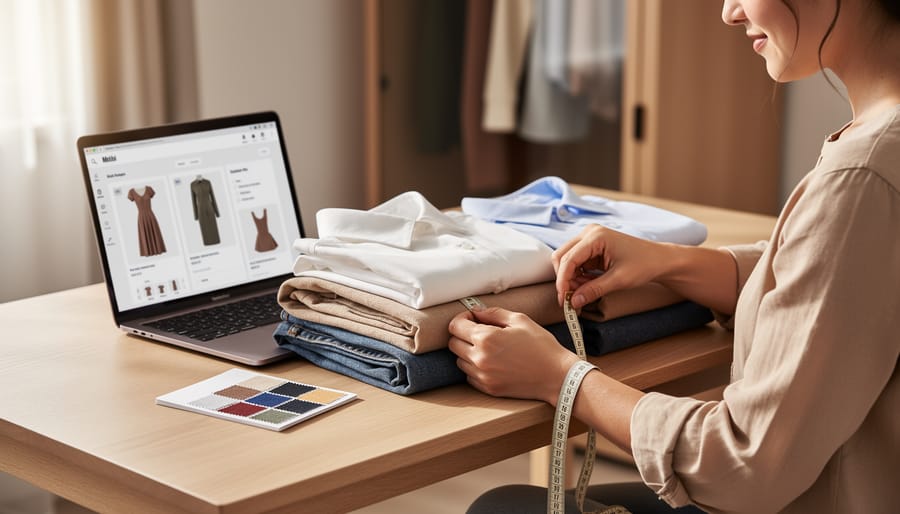
Shopping online for clothing has transformed from a convenience into an art form, one that rewards the prepared buyer with remarkable finds and penalizes the careless with sizing mishaps and return hassles. The key to successful digital wardrobe building lies in mastering four core competencies: accurate size assessment across brands, fabric quality evaluation through screen and description, retailer vetting for both curation and ethics, and strategic timing of purchases to maximize value without sacrificing choice.
The digital marketplace in 2026 offers unprecedented access to global fashion, from independent designers in Seoul to heritage brands in Milan, all delivered to your door. Yet this abundance creates its own challenge. Without the tactile experience of touching fabric or the mirror test of trying pieces on, you’re making decisions based on photography, measurements, and trust. Women who excel at online clothing shopping treat each purchase as a small research project, not an impulse click.
The difference between frustration and satisfaction often comes down to preparation. Understanding your true measurements, knowing which fabrics photograph deceptively, recognizing the hallmarks of quality construction in product images, and identifying which retailer categories serve your specific needs transforms online shopping from a gamble into a reliable strategy. This guide walks you through the essential factors that separate smart purchases from regrettable ones, compares retailer types so you shop in the right places, and reveals the mistakes that cost time, money, and closet space.
Essential Factors to Consider Before You Buy
Understanding Measurements and Fit
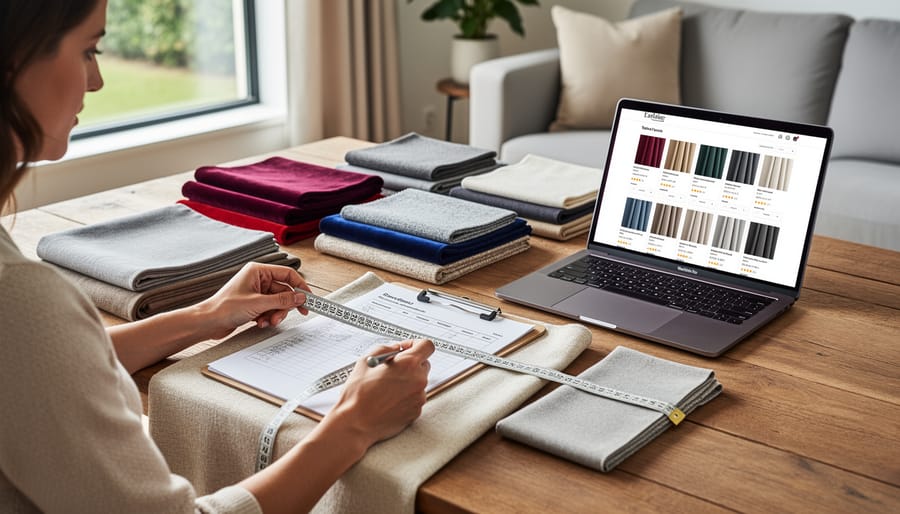
The foundation of successful online clothing purchases starts with three precise measurements: bust, waist, and hips. Use a fabric measuring tape held snug but not tight, measuring over undergarments you’ll actually wear. Record these numbers in both inches and centimeters, then reference them against each brand’s specific sizing chart, never assume your usual size translates across retailers.
Brand-specific charts often reveal crucial differences. A UK 12 from one designer might accommodate a 28-inch waist, while another’s allows 30 inches. Screenshot or save charts for brands you frequently purchase from, noting which tend to run small or large based on your measurements.
Fabric composition dramatically affects fit. Garments with 2-5% elastane offer some forgiveness, while 100% cotton wovens provide none. When measurements fall between sizes, choose smaller for stretch fabrics and larger for rigid materials. Pay attention to garment construction details in product descriptions: darts, princess seams, and adjustable features like drawstrings indicate better fit potential than unstructured designs. Check customer reviews specifically mentioning body measurements similar to yours, they’re your most reliable fit predictor.
Evaluating Quality Through Screens
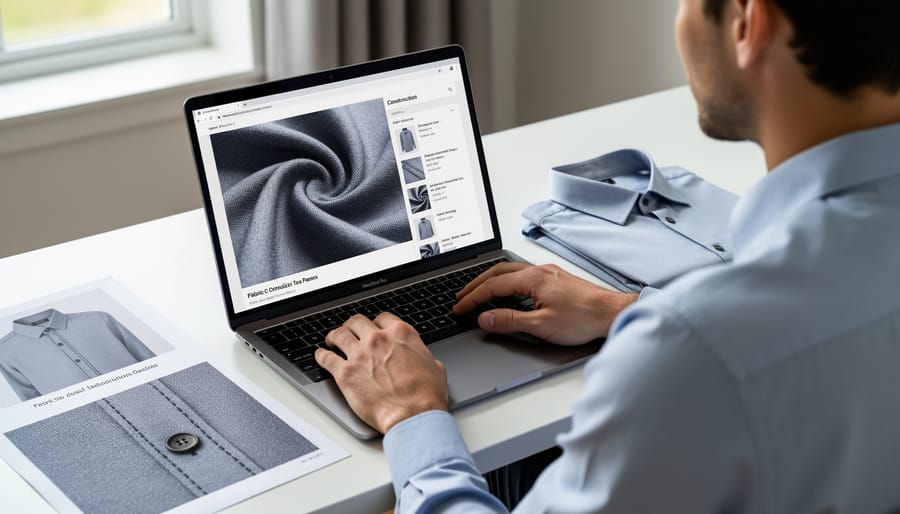
Assessing garment quality without touching fabric requires training your eye to read digital clues. Start with product photos: examine close-up shots for fabric texture and weave density, high-quality materials show consistent, tight construction rather than visible gaps between threads. Check seam finishes in detail images; well-made garments display even stitching, finished edges, and reinforced stress points at shoulders and side seams.
Fabric descriptions reveal more than material composition. Natural fibers like cotton, silk, and wool generally outlast synthetics, though blends can offer practical benefits. Pay attention to fabric weight specifications, lightweight cotton under 150gsm wrinkles easily, while 180gsm-plus suggests better structure. Terms like “brushed,” “mercerized,” or “combed” indicate quality finishing processes.
Construction details matter significantly. Look for descriptions mentioning lined garments, French seams, or bias-cut panels, markers of thoughtful manufacturing. Button quality signals overall standards; real shell or corozo buttons suggest better construction than plastic alternatives. Multiple product photos showing interior finishes, hem treatments, and zipper quality provide the transparency serious retailers embrace.
Return Policies That Protect You
A generous return window separates confident retailers from those hoping you won’t bother sending items back. Look for policies offering at least 30 days from delivery, with 60 to 90 days signaling exceptional customer commitment. The best policies specify clear return and exchange policies in plain language, covering who pays return shipping, whether you receive refunds or store credit, and how quickly your money comes back.
Red flags appear when retailers bury return terms in dense legal text or charge restocking fees exceeding 15 percent. Watch for policies requiring items in “resalable condition” without defining what that means, vague language often leads to rejected returns. Final sale items deserve scrutiny; buying a dress you can’t return demands absolute certainty about fit and quality.
Free return shipping transforms the experience from financial risk to genuine try-before-you-buy convenience. Many direct-to-consumer brands now include prepaid return labels, while others offer free returns above certain order values. Calculate the true cost: a $20 return shipping fee on a $50 blouse changes the value equation entirely.
Types of Online Clothing Retailers Compared
Luxury and Designer Platforms
Luxury and designer platforms represent the premium tier of online fashion retail, offering authenticated pieces from established fashion houses and emerging high-end labels. These platforms, including Net-a-Porter, Farfetch, Mytheresa, and MatchesFashion, curate collections that reflect current runway trends while maintaining rigorous quality standards.
What sets luxury retailers apart is their commitment to authentication and provenance. Every item arrives with guarantees of legitimacy, accompanied by original packaging and often certificates of authenticity. This security matters when investing in pieces that cost hundreds or thousands of dollars.
The customer service experience matches the price point. Expect white-glove treatment: personalized shopping assistance, detailed product consultations, flexible payment options, and generous return windows that acknowledge the considered nature of luxury purchases. Many platforms assign dedicated stylists to high-value customers.
Photography and product descriptions exceed standard retail detail. You’ll find close-ups of fabric weave, hardware finishes, and construction methods, essential information when evaluating craftsmanship remotely. These platforms understand that luxury buyers need comprehensive visual and technical data before committing to investment pieces.
Fast Fashion and Trend-Driven Sites
Fast fashion platforms like Zara, H&M, and ASOS excel at delivering runway-inspired pieces at accessible price points, typically refreshing their inventory weekly to capture emerging trends. These sites prove invaluable when you need a statement piece for a single season or want to experiment with a bold trend without significant investment.
However, adjust your quality expectations accordingly. Fabrics tend to be synthetic blends that may pill or lose shape after several washes. Stitching quality varies, so examine close-up photos carefully, loose threads or uneven seams signal pieces that won’t survive multiple wears.
Customer reviews become especially critical here. Look for comments about actual longevity and whether items withstand washing. Photos from real buyers reveal how pieces look on diverse body types versus styled marketing shots.
Consider the environmental trade-off. These platforms encourage frequent purchasing cycles, contributing to textile waste. Shop selectively for trend pieces while building your core wardrobe from more durable sources.
Direct-to-Consumer Brands
Direct-to-consumer brands sell exclusively through their own websites, eliminating wholesale markups and retail intermediaries. This vertical integration translates to better value: you’re paying for the garment itself rather than distribution channels and department store margins.
The consistency advantage here is significant. Because these brands control their entire production process, sizing tends to remain stable across seasons and styles. Once you know your size in Everlane or Reformation, you can shop with greater confidence than you would navigating the variable sizing of multi-brand retailers.
Many DTC brands build their reputation on transparency, detailing factory locations, material sourcing, and production costs. This information helps you assess quality before purchasing. Customer reviews on these sites typically reflect real experiences with that specific brand’s fit standards, making them more reliable than aggregated marketplace reviews.
The downside? Limited style diversity compared to multi-brand platforms. You’re committing to one aesthetic vision per site, which works brilliantly when a brand’s design philosophy aligns with yours but requires visiting multiple sites to build a varied wardrobe.
Personal Styling Services
Virtual styling platforms have transformed how busy professionals approach their wardrobes, offering expert curation without the time commitment of traditional personal shopping. These services typically work through one of two models: subscription boxes where stylists send pre-selected pieces based on your preferences, or consultation-based services where you receive personalized recommendations for purchasing items yourself.
The consultation model provides exceptional value for building cohesive wardrobes. During virtual sessions, experienced stylists analyze your body type, lifestyle needs, and aesthetic preferences to create shopping strategies tailored specifically to you. They navigate sizing inconsistencies across brands, identify quality pieces within your budget, and suggest combinations that maximize versatility.
For professionals managing demanding schedules, the time savings alone justify the investment. Rather than spending hours researching trends and scrolling through countless options, you receive curated recommendations from someone who understands both fashion fundamentals and your individual requirements. This targeted approach significantly reduces the trial-and-error inherent in online shopping while accelerating your style confidence.
Smart Shopping Strategies for Online Fashion

Success in online fashion shopping isn’t just about knowing what to buy, it’s about knowing when and how to buy it. Strategic timing transforms your shopping budget, while smart preparation prevents costly mistakes. Most retailers follow predictable sale cycles: new season launches arrive in late August and late February, with the previous season’s inventory heavily discounted. The sweet spot for bargains typically falls six to eight weeks after seasonal launches, when retailers begin aggressive markdowns but sizes remain available. End-of-season clearances in January and July offer the deepest discounts, though selection narrows considerably.
- Screenshot or save images of items you love to track price changes and availability across retailers
- Shop Tuesday through Thursday mornings when new inventory drops and flash sales often launch
- Create a dedicated folder for sizing charts from your favorite brands for quick reference
- Sign up for brand newsletters using a dedicated email address to access exclusive previews without cluttering your primary inbox
- Use browser extensions that automatically apply coupon codes at checkout to capture discounts you might miss
- Photograph yourself in well-fitting clothes you already own to compare proportions with product photos
- Build wishlists during full-price periods, then monitor them for markdowns before buying
- Schedule major wardrobe purchases around major sale events: Black Friday, Memorial Day, Labor Day, and post-holiday clearances
- Keep a running note of your measurements across different body areas to quickly assess garment dimensions
- Set price alerts on items you want but don’t need immediately to buy at your target price point
Virtual try-on technology has evolved beyond gimmick status. While not perfect, augmented reality features now available on many retail apps provide helpful visualization, particularly for accessories and structured pieces like blazers where silhouette matters more than drape. The technology works best when you’ve uploaded accurate body measurements rather than relying on automated scanning.
Customer reviews deserve detective work, not passive reading. Focus on reviews from buyers with similar body types and style preferences mentioned in their profiles. Photos from actual customers reveal fit reality that professional styling conceals, look for how fabric hangs on different body types, whether colors appear true to professional shots, and how garments perform after washing. Reviews mentioning specific measurements (“I’m 5’6″ and the midi hit at my ankle”) provide more value than subjective size assessments.
Virtual styling services accelerate your learning curve dramatically. Rather than making repeated trial-and-error purchases, a single consultation provides personalized guidance on which retailers suit your proportions, which trends complement your lifestyle, and how to build a cohesive wardrobe rather than collecting disconnected pieces. The investment pays for itself by preventing expensive mistakes and helping you develop an eye for what works on your specific frame.
Navigating Sizing Across Brands and Regions
Sizing inconsistencies across brands and regions create one of the most frustrating barriers to successful online clothing purchases. A size 8 in one brand may fit like a size 10 in another, while European sizing follows completely different numbering systems than US or UK standards.
Start by creating a personal sizing reference document that records your measurements in each brand you’ve purchased from. Note which size worked in specific garments, “Brand A blazers: size 10; Brand A dresses: size 12” proves far more useful than generic size assumptions. This database becomes increasingly valuable as you shop, allowing you to order confidently from familiar retailers while making educated guesses with new ones.
International size conversions require more than simple chart lookups. A European size 40 theoretically equals a US size 10, but vanity sizing and regional fit preferences mean this conversion serves only as a starting point. European brands typically run smaller through the shoulders and bust while offering longer torsos, whereas American sizing often provides more room through the midsection. Asian sizing generally runs an entire size smaller than Western equivalents, with proportions designed for different body shapes altogether.
Vanity sizing, the practice of labeling garments with smaller numbers than their actual measurements, varies wildly by brand positioning. Premium contemporary brands often size more generously than fast fashion retailers targeting younger demographics, even when the physical garments measure identically. Always check the specific garment measurements provided in product descriptions rather than relying on the size label alone.
Build your sizing database systematically by photographing size tags from garments you own and love, noting which brands require sizing up or down from your usual selection. This simple practice transforms chaotic guesswork into reliable data.
Common Mistakes to Avoid When Shopping Online
Understanding where shoppers typically stumble helps you avoid costly mistakes and disappointing purchases. Most online shopping regret stems from a handful of preventable errors that seem minor in the moment but lead directly to unworn garments and complicated returns.
The most common missteps include:
- Ignoring fabric content entirely, ordering items without checking if they’re synthetic, natural, or blended, then discovering uncomfortable materials that don’t breathe or drape as expected
- Relying solely on styled product photos without reading actual garment dimensions, which leads to surprises when a “midi” skirt arrives at ankle length or a “cropped” jacket hits mid-torso
- Skipping customer photo reviews that show real bodies in real lighting, missing crucial information about transparency, fit on different body types, and true color
- Shopping without knowing your current measurements, assuming you’re still the same size you were last year or that all size 8s fit identically across brands
- Impulse buying during flash sales without researching the brand’s reputation, return policy, or typical quality standards
- Overlooking return deadlines and storing items with tags still attached for weeks, only to discover you’ve missed the exchange window
- Ordering multiples “just to see” without a genuine intention to return promptly, which creates decision paralysis and often results in keeping mediocre pieces
- Trusting heavily filtered product photography without cross-referencing with customer images or video reviews that reveal actual texture and movement
The fabric content mistake proves particularly costly. A dress might look identical in photos whether it’s silk or polyester, but the wearing experience differs dramatically. Always check the care label details in product descriptions before adding items to your cart.
Similarly, treating model photos as accurate representations of how garments will look on you ignores the reality of professional styling, specific body proportions, and strategic pinning that happens behind the scenes. Models typically wear sample sizes that may fit differently than production runs. Cross-reference the styled images with flat lay measurements and customer photos showing various body types.
Many shoppers also underestimate the value of reading negative reviews carefully. A pattern of complaints about sizing running small, colors appearing different than photographed, or fabric feeling cheap signals real issues that outweigh a few glowing five-star reviews. The most useful customer feedback comes from verified purchasers who include photos and specific details about their measurements and how the item fit.
Making the Most of Virtual Styling Services
Virtual styling services transform online clothing shopping from a solitary guessing game into a collaborative partnership with fashion professionals who understand how to build wardrobes that work. During a virtual consultation, you’ll typically complete a style questionnaire and share photos of your current wardrobe, your lifestyle needs, and your body shape concerns. The stylist then curates personalized recommendations from retailers that match your budget, sending you direct links to specific pieces rather than vague suggestions.
The most successful virtual styling sessions happen when you come prepared. Take accurate measurements beforehand, photograph your existing wardrobe staples, and articulate specific goals beyond “I want to look better.” Are you building a professional wardrobe for a new job? Transitioning your style after a major life change? Needing cohesive pieces that work together rather than random statement items? Clear objectives help stylists deliver targeted recommendations that justify the investment.
Professional styling guidance provides the strongest return during pivotal moments: career transitions requiring a new professional image, significant weight changes necessitating complete wardrobe rebuilds, or when you’re simply stuck in a purchasing rut and repeatedly buying clothes that don’t work together. A skilled stylist recognizes your body proportions, understands which online retailers run true to size for your shape, and identifies quality indicators in product descriptions that you might overlook.
Virtual sessions also accelerate your fashion education. Rather than learning through trial and costly error, you gain insights into why certain cuts flatter your frame, which fabrics suit your climate and lifestyle, and how to spot quality construction details in online photos. This knowledge compounds over time, making you a more confident independent shopper even after the consultation ends.
Frequently Asked Questions
Understanding the nuances of online clothing shopping often comes down to navigating specific scenarios and concerns. These practical questions reflect the real challenges shoppers encounter when building their wardrobes through digital channels.
What should I do if an item doesn’t fit when it arrives?
Check the retailer’s return window immediately and initiate the return process while you’re still within the timeframe. Keep all original tags attached and packaging intact, and photograph the item if the fit issue relates to a sizing discrepancy with the chart provided, this documentation can be valuable for exchanges or customer service discussions.
Are luxury or designer pieces safe to buy online without trying them on first?
Yes, provided you shop from reputable retailers with comprehensive return policies and you’ve done your homework on the brand’s sizing characteristics. Many luxury platforms offer detailed measurements, styling advice, and often include complimentary returns, making the experience low-risk for established brands you’ve researched thoroughly.
How do I handle it when colors look different than they appeared on my screen?
Accept that some variation is inevitable due to screen calibration and lighting differences. Read the detailed color description rather than relying solely on photos, check customer reviews mentioning color accuracy, and know that most retailers consider this a valid return reason if the discrepancy is significant.
How long should I keep tags on new purchases before I’m committed?
Keep tags attached until you’ve tried the item on properly with shoes and accessories you’d actually wear with it, ideally within the first few days of receipt. Most return windows run 30 days, but don’t wait until the deadline, earlier returns process faster and some policies have shorter windows for sale items.
Is investing in a personal styling service actually worth it for online shopping?
If you frequently make purchasing mistakes, struggle with proportions and fit, or find yourself overwhelmed by options, professional guidance pays for itself through reduced returns and better cost-per-wear on your purchases. Styling consultations are particularly valuable when building a cohesive wardrobe or navigating a style transition, as they compress your learning curve significantly.
Should I order multiple sizes of the same item to ensure one fits?
This strategy works when a retailer offers free returns, you’re between sizes, or trying an unfamiliar brand, but it requires discipline to return the extras promptly. Order adjacent sizes rather than a wide range, and be honest about which fits best rather than keeping a too-tight option you hope to shrink into.
The confidence you build through experience transforms these concerns into routine decisions. Each purchase teaches you more about your preferences, the brands that work for your proportions, and the shopping strategies that yield the best results. Trust develops gradually as you learn which retailers deliver on their promises and which styling approaches suit your lifestyle.
Shopping online for women’s clothing transforms from overwhelming to empowering when you approach it with the right preparation. The strategies we’ve explored, knowing your measurements, researching retailers, reading reviews thoughtfully, and understanding return policies, create a foundation for confident purchasing decisions. Each successful order teaches you something new about fit preferences, fabric expectations, and which brands align with your body type.
The digital marketplace offers unprecedented access to global fashion trends and diverse style perspectives that physical stores simply can’t match. By applying the buying factors we’ve discussed and avoiding common pitfalls, you’ll develop an intuition for spotting quality through screens and making purchases that genuinely enhance your wardrobe rather than languish unworn.
For those navigating major style transitions or building a cohesive professional wardrobe, professional styling guidance can significantly accelerate your confidence and reduce costly mistakes. A virtual consultation provides personalized direction that helps you shop more effectively from the start.
Embrace the convenience and possibility that online fashion shopping offers. With strategic thinking and continued learning, you’ll master the art of building a wardrobe that reflects your authentic style, all from wherever you are.